Sports Performance PT in Clifton, NJ | Recover Stronger
Clifton Physical Therapy
Sports Performance PT in Clifton, NJ | Recover Stronger
Clifton Physical Therapy
Sports Medicine services offered in Clifton, NJ
Leading an active life has numerous benefits, but it can be challenging to achieve and maintain optimal performance. Tiffany Zarcone, PT, DPT, and her team at Clifton Physical Therapy in Clifton, New Jersey, are experts in sports medicine, helping you reach your fitness goals and avoid injuries. They also offer advanced rehabilitation for sports injuries. Call Clifton Physical Therapy to learn more about gaining an advantage with sports medicine, or schedule a consultation online today.
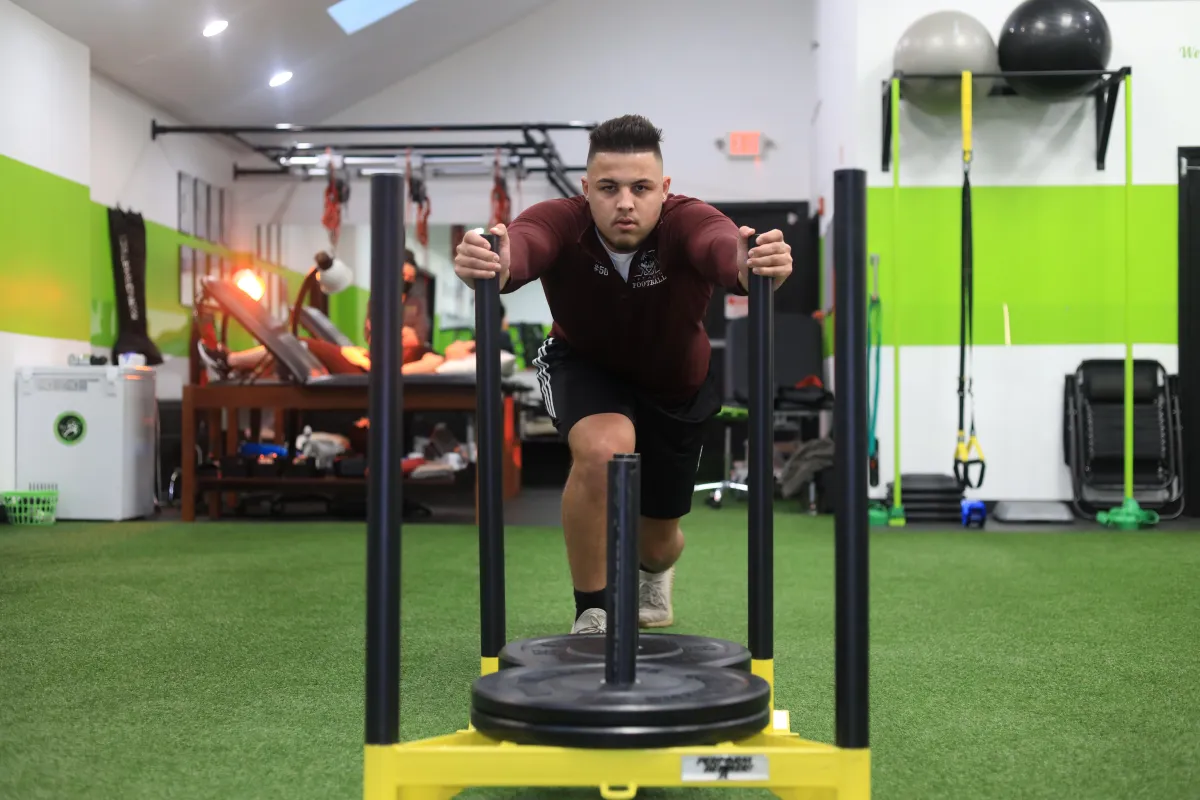
Sports Medicine services offered in Clifton, NJ
Leading an active life has numerous benefits, but it can be challenging to achieve and maintain optimal performance. Tiffany Zarcone, PT, DPT, and her team at Clifton Physical Therapy in Clifton, New Jersey, are experts in sports medicine, helping you reach your fitness goals and avoid injuries. They also offer advanced rehabilitation for sports injuries. Call Clifton Physical Therapy to learn more about gaining an advantage with sports medicine, or schedule a consultation online today.
What Is Sports Performance Physical Therapy?
Sports performance PT is physical therapy that keeps going until you can do what your sport demands. It starts with the same clinical basics as any good rehab: tissue healing, pain management, careful assessment. Then it adds sprinting, cutting, jumping, landing, and contact, in a planned order, with numbers attached.
How Is Performance PT Different From Traditional PT?
Traditional PT isn't worse. It's aimed at a different finish line. If you're recovering from a fall or a back problem, getting back to daily life is the right goal. Athletes live in a different range of demands: sprinting, braking hard, taking a hit, moving well when you're exhausted in the fourth quarter. The difference shows up in how we work:
| Traditional PT | Performance PT |
|---|---|
| Goal | Pain relief, daily function |
| Return to your sport at your level or better | Return to your sport at your level or better |
| Assessment | Whole-body movement, strength symmetry, sport mechanics |
| Exercise | Power, speed, deceleration, sport drills |
| Discharge | You meet objective return-to-play criteria |
Those criteria are concrete. We compare single-leg hop distance and strength against your uninjured side, and we watch how your landing mechanics change as you tire. Your sport sets the targets.
Who Should See a Performance PT?
Athletes coming back from surgery are the obvious group, but they're not the only one.
Some people were discharged months ago and still feel a step behind. Others are healthy and want to stay that way, and a quick movement screen can catch a stiff ankle or weak hip before it turns into a knee problem. Then there are the multi-sport kids who go from soccer to basketball to travel baseball with no real break. In a 2008 trial of 1,892 female soccer players aged 13 to 17, teams that used a structured warm-up had about 32% fewer injuries overall, and about half as many overuse and severe injuries (Soligard et al., BMJ). Adults count too. If you play in a Clifton rec league or run local 10Ks in your 40s, you probably care more about playing at 55 than about winning this weekend.
When Should You See a Doctor First?
Some problems need a physician's eyes before anyone starts exercising. Get checked first if you:
Can't put weight on the limb after a fall or collision
Notice numbness, tingling, or a joint that locks or gives way
Have swelling that came on fast, or a visible deformity
Have pain at night that doesn't change with position, or a fever along with it
What Should You Expect at Your First Visit?
Plan on about an hour. We talk through your injury history and your sport, then watch you move: squat, hop, land, cut, and run if you're able. We also test strength on both sides, because the gap between them tells us more than either number alone. Many return-to-sport protocols use about 90% of your uninjured side as a benchmark.
You'll leave with a clear idea of what's limiting you, what the first few weeks look like, and how often we'd see you. Wear clothes you can move in, bring your sneakers, and bring any imaging reports or surgical notes.
What Does a Program Look Like?
It varies, but most follow the same arc.
We start with an assessment: injury history, what your sport asks of you, strength imbalances, how you move. Without that baseline, we'd be guessing.
Early on, the work looks a lot like regular PT. We calm pain and swelling, get range back, and rebuild basic strength. That's fine. Skipping it would be a mistake.
Next comes the part many clinics skip: rebuilding athletic capacity with heavier loading, single-leg work, eccentric control, and core strength.
Last, we bring the sport back in pieces. Running progressions, cutting, decelerating, and drills that look like your game. You're cleared for what you can show us, not how you feel that day.
A minor overuse issue caught early might take a few weeks. A post-surgical return often takes nine months or longer, which fits what the research says about rushing.
Why Does the Handoff Matter?
Plenty of setbacks happen right after discharge. You leave PT with a summary sheet and land in full-speed practice. Your coach doesn't know what you went through, and nobody is bridging the gap.
We keep your therapist and performance coach in contact from the first visit. They work from the same test results and plan the same progressions, so your return to full training builds on your rehab.
How Do You Choose a Sports Performance PT in Clifton?
Not every clinic that says "sports" does this work. Ask whether the PT is licensed and has musculoskeletal training, and whether they've worked with your sport. Ask what their return-to-play criteria are. If the answer is "when the pain is gone," that's traditional PT with a sports label. Ask whether they'll talk to your coach, and what happens after formal PT ends. You should leave with a plan, not a handshake.
FAQs
Do I need to be injured to see a performance PT?
No. A movement assessment is useful for any athlete, and many people come in to fix limitations before they cause trouble.
Will insurance cover it?
Injury-related PT is often at least partly covered, depending on your plan. Performance-focused sessions without an injury may not be. Check with your insurer and ask us about billing before your first visit.
How is this different from sports medicine?
Sports medicine is the broad field, with physicians, athletic trainers, and therapists. Performance PT is a physical therapy approach within it, focused on returning you to your sport.
How long does it take?
It depends on the injury and where you're starting. Ask for the specific benchmarks you need to hit. A good therapist can tell you.
Clifton Physical Therapy
✆ Phone (appointments): (973)-241-1338
Address: 1059 Bloomfield Ave, Clifton, NJ 07012
Clifton Physical Therapy | cliftonphysio.com


