Acupuncture Services Clifton, NJ | Licensed Acupuncturists
Clifton Physical Therapy
Acupuncture Services Clifton, NJ | Licensed Acupuncturists
Clifton Physical Therapy
Acupuncture services offered in Clifton, NJ
Acupuncture has delivered proven pain relief for thousands of years and continues to be an effective therapy for many health conditions. Tiffany Zarcone, PT, DPT, and her team at Clifton Physical Therapy in Clifton, New Jersey, offer acupuncture to treat musculoskeletal disorders, injuries, and other conditions like migraines. Call the office or book an appointment online today for expert acupuncture treatment.
Acupuncture services offered in Clifton, NJ
Acupuncture has delivered proven pain relief for thousands of years and continues to be an effective therapy for many health conditions. Tiffany Zarcone, PT, DPT, and her team at Clifton Physical Therapy in Clifton, New Jersey, offer acupuncture to treat musculoskeletal disorders, injuries, and other conditions like migraines. Call the office or book an appointment online today for expert acupuncture treatment.
What Is Acupuncture, and Who Is It For?
Acupuncture is a treatment where a licensed practitioner places very thin, sterile needles at specific points on your body. Most people in Clifton come to us for pain: a back that locks up after a long shift, a neck that aches from hours at a desk, or knees that complain on the stairs. Some come because they've tried the usual options and want one more thing that isn't a pill.
The practice has roots in traditional Chinese medicine and is now used as a complementary therapy around the world. At Clifton Physical Therapy, we offer it alongside hands-on care and exercise-based rehab, because pain rarely has just one cause and it rarely has just one fix.
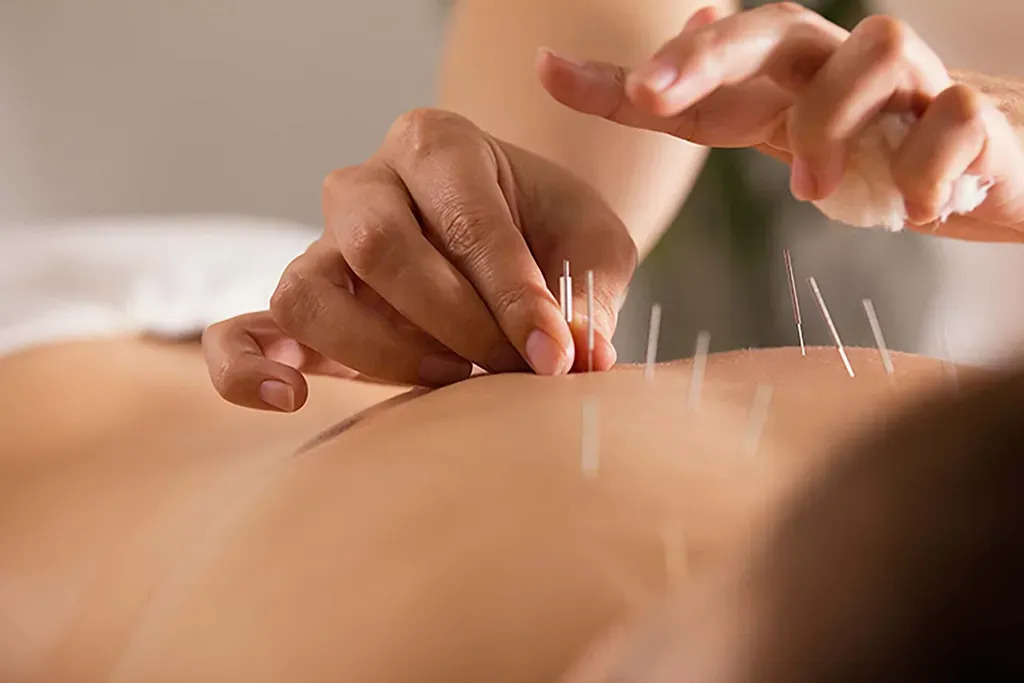
The most common question we hear is "Does it hurt?" Honestly, most people barely feel the needles. They're solid, not hollow, and about as thin as a strand of hair. What you'll usually notice is a quick tingle, then a dull, heavy ache. That ache is a normal sign the needle has reached the right depth.
How Does Acupuncture Work?
There are two ways to explain it, and you'll hear both.
The Traditional View
Traditional Chinese medicine describes a life force called qi (pronounced "chee") flowing through pathways called meridians. Illness is seen as a blockage or imbalance in that flow. Needles placed along the meridians are meant to restore it. Practitioners describe roughly 361 classic points across the body.
The Western View
Many clinicians see acupuncture points as places where stimulation reaches nerves, muscle, and connective tissue. A 2017 review found that many acupuncture points sit where several sensory nerve endings overlap. Stimulating those spots may change how your central nervous system processes pain, and it may also increase blood flow to the area. Some researchers also believe it prompts the release of endorphins, your body's own painkillers.
We'll be straight with you: nobody has pinned down the exact mechanism. What we can say is that the research on whether it helps is better than most skeptics assume. A large 2018 analysis in The Journal of Pain pooled data from nearly 21,000 patients across 39 trials. It found that acupuncture reduced chronic pain more than both sham needling and no acupuncture at all. The benefit also lasted. Pain relief had dropped by only about 15% at the one-year mark.
That doesn't make it a miracle. It makes it a reasonable, low-risk option with real evidence behind it.
What Conditions Can Acupuncture Help With?
Acupuncture isn't a cure-all, and any clinic that tells you otherwise isn't being honest. Here is where the evidence is strongest, and where it's more mixed.
Well supported:
Low back pain
Neck pain
Knee pain from osteoarthritis
Tension headaches and migraines
The National Center for Complementary and Integrative Health (NCCIH) lists these among the conditions where acupuncture can help. Chronic low back pain is the one we see most often. It's also one where people tend to have already tried a lot, so they arrive with a healthy dose of doubt. We like that. It keeps everyone honest about progress.
Promising, with less certainty:
Fibromyalgia
Menstrual cramps
Tennis elbow and other repetitive strain problems
Nausea after surgery or chemotherapy
Peripheral neuropathy
Hot flashes related to menopause
Acupuncture works best as a partner to other care, not a replacement. If you have a chronic or serious condition, keep seeing your doctor and tell them you're trying acupuncture. NCCIH gives the same advice.
A quick example. Picture a warehouse worker in his late 40s with a low back that's been tight for two years. Stretching helps for an hour. Ibuprofen helps for a few more. In a case like this, we'd typically pair acupuncture with movement work, so the needles quiet the pain enough for him to actually do the exercises that fix the underlying weakness. That combination is where we see people turn the corner, much more than with either approach alone.
Is Acupuncture Safe? Risks and Who Should Skip It
For most people, acupuncture is low-risk when a trained practitioner uses sterile, single-use needles. The common side effects are minor: a little soreness, a small bruise, or a drop of blood where a needle went in. Some people feel lightheaded or sleepy afterward.
Serious problems are rare, but they exist. A needle placed too deep near the chest can puncture a lung, and nonsterile needles can cause infection. Both are almost always tied to poor training or poor technique, which is why who treats you matters more than most people realize. Hold off, or talk with your doctor first, if any of these apply:
You have a pacemaker or other implanted electrical device
You're pregnant, since some points can stimulate labor
You take blood thinners or have a clotting disorder
You have an active skin infection near the treatment area
You have new, severe, or unexplained pain, especially with fever, weight loss, numbness, or weakness. That needs a proper workup before anyone puts a needle in.
That last point is one we feel strongly about. Acupuncture can calm pain down, but pain is also a signal. We'd rather you get checked first than mask something that needs attention.
What Happens During an Acupuncture Visit?
Knowing what's coming takes away most of the nerves. Here's how a typical visit goes.
The conversation
Your first appointment starts with questions, not needles. We ask about your pain, sleep, stress, habits, and medical history. Some acupuncturists also look at your tongue and check the pulse in your wrist, which are traditional ways of reading the body's overall state.
The Setup
You'll lie on a padded table, and we'll tell you whether you need to remove any clothing. A gown, towel, or sheet is provided. Loose, comfortable clothes make it easier, since points can be far from where it hurts. Knee pain, for instance, may involve points in your lower leg or even your hand.
The Needles
A typical session uses somewhere between 5 and 20 needles. They're single-use and disposable. After insertion, your practitioner may gently twirl them, warm them, or add a mild electrical pulse.
The Rest
Then you relax. The needles generally stay in for 10 to 20 minutes. Plenty of people doze off. Removal is usually painless.
After the Session
Some people leave relaxed, and others feel energized. A few feel a bit drowsy, so if it's your first time, give yourself a few minutes before driving. Mild soreness or a small bruise at a needle site is common and clears up on its own.
How many visits will you need?
It depends on what we're treating and how long you've had it. A common starting plan is one or two sessions a week. For a single problem, 6 to 8 treatments is typical, and acute issues often improve within 8 to 12 sessions. Chronic conditions may take longer, sometimes a couple of months of regular visits. Most people should notice some change within the first few weeks. If you don't, we'll talk openly about adjusting the plan or trying something else. Acupuncture isn't right for everyone, and we'd rather tell you that than keep you coming back.
Tell us beforehand if you:
Have a pacemaker, because electrical stimulation could interfere with it
Are pregnant, since certain points are thought to stimulate labor
Take blood thinners or have a bleeding disorder
Acupuncture is considered low-risk when a trained, licensed practitioner uses sterile needles. In New Jersey, acupuncturists must be licensed by the state, and that's the first thing worth checking wherever you go. Unqualified providers and reused needles are where real harm, like infections or organ injury, comes from.
Ready to Try It?
If you've been living with pain that hasn't budged, a conversation costs you nothing. Tell us what hurts, what you've already tried, and what you're hoping to get back to doing. At Clifton Physical Therapy, we'll tell you honestly whether acupuncture makes sense for you, or whether something else would serve you better.
Call us at (973) 241-1338 to book your first acupuncture visit. Our front desk can check your insurance benefits, answer questions about what to expect, and find a time that fits your schedule.
Clifton Physical Therapy
✆ Phone (appointments): (973)-241-1338
Address: 1059 Bloomfield Ave, Clifton, NJ 07012
Clifton Physical Therapy | cliftonphysio.com


